Product definition
- Bike category and target market
- Target rider, route, gradient and total load
- Wheel, frame and packaging constraints
Align the bike requirements, motor, battery, controller, HMI, sensors, communication interfaces, engineering files and validation gates before moving from samples to production RFQ.
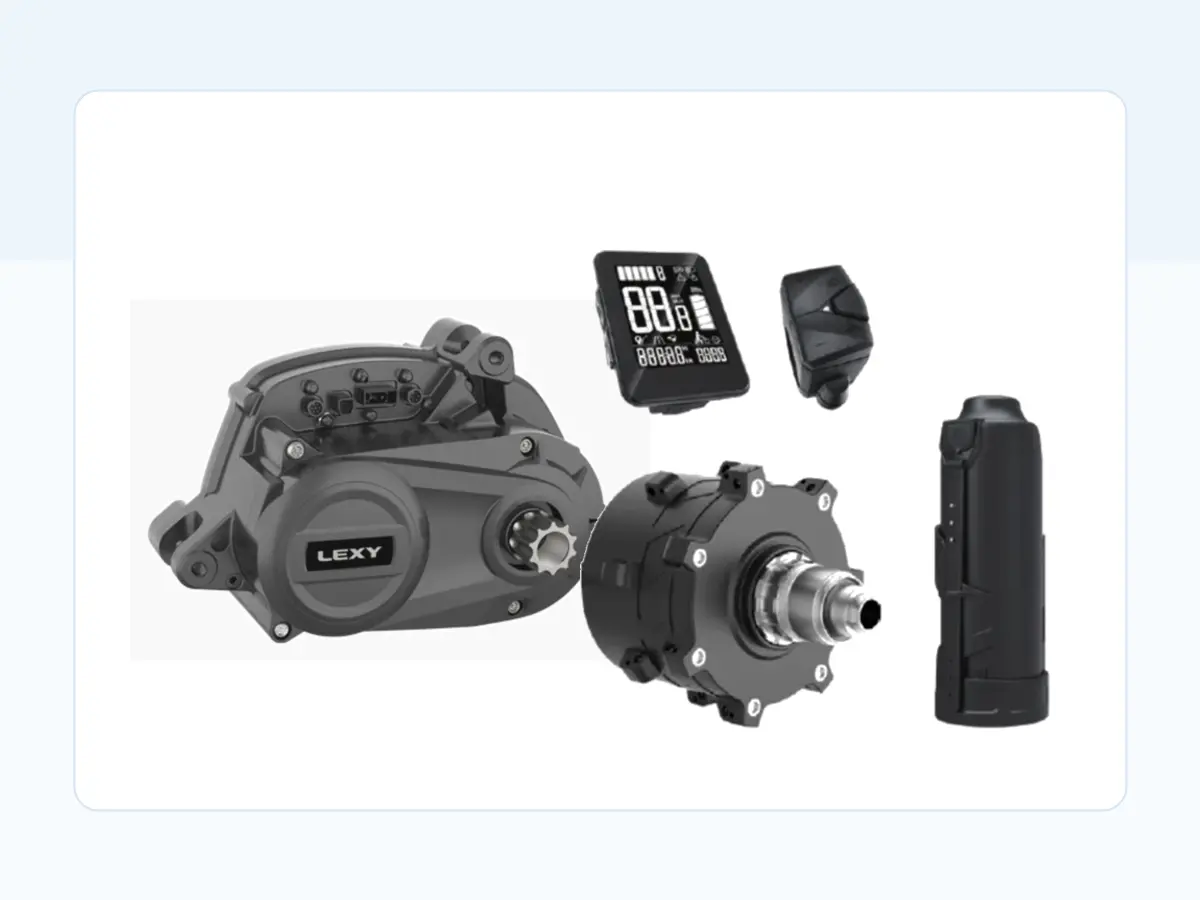
System selection becomes reliable only when the intended product and use conditions are documented.
Record the owner, input, output and acceptance method for each interface before the sample configuration is released.
Engineering information should match the selected system, sample configuration and evaluation scope.
Datasheet, CAD, STEP and related engineering-file availability is confirmed through the OEM discussion for the target system. Public-page content does not replace controlled engineering documentation.
Each gate should have a controlled configuration, expected result, evidence and named owner.
Confirm the product requirements, component scope, files, interfaces, responsibilities and sample configuration before assembly.
Verify mechanical fit, cable routing, connectors, power-up, communication, controls, sensors and basic fault behavior.
Run the agreed operating checks, assist modes, starts and stops, representative loads and routes, thermal observations, noise review and service-access checks.
Close findings against the recorded configuration, align firmware and parameter baselines, freeze the component scope and prepare annual volume and launch inputs.
Use the comparison guide, product pages and RFQ page according to the current engineering question.
Email echo.li@kingclean.com with the bike requirements, preferred system, mechanical constraints, battery/controller/HMI/sensor scope, protocol, requested files, sample quantity, validation scope, annual volume and launch timeline.
Email the eBike Team