Bike and duty cycle
- City, trekking, road, trail, MTB or cargo category
- Target market, route, gradient and total load
- Expected riding behavior and service environment
A useful comparison starts with the target bike, duty cycle, integration constraints, service model and validation plan. It does not start and end with one peak specification.
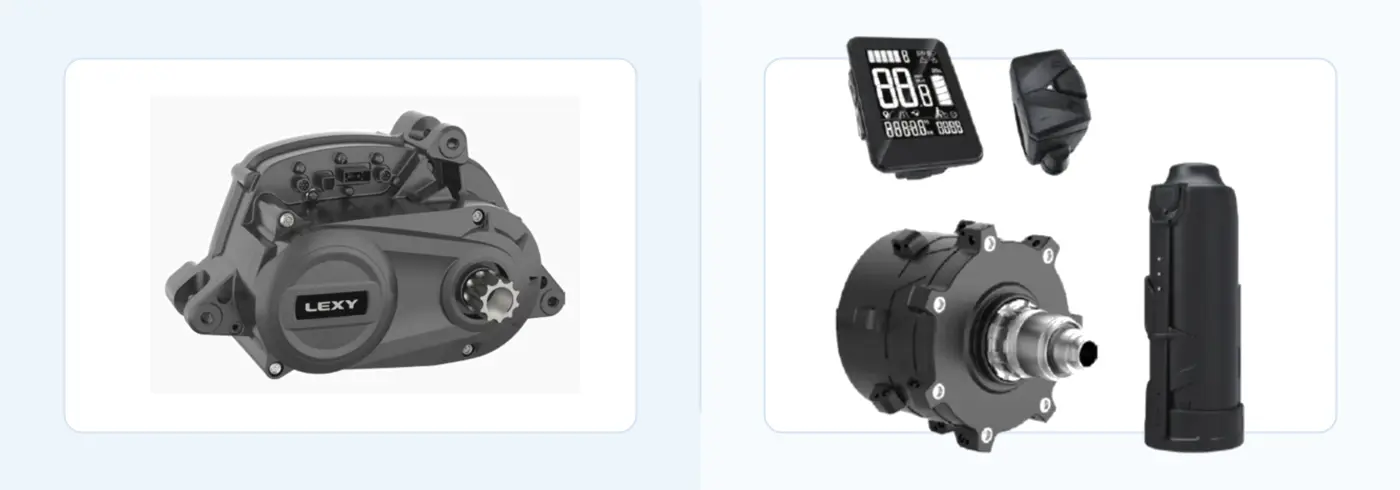
The right architecture is the one that fits the complete OEM program and can be validated, serviced and supplied consistently.
Both architectures require a complete system review. The main integration questions are different.
A mid-drive places the drive unit at the bicycle drivetrain and should be reviewed with the frame interface, chain line, gearing, shifting under load, cooling, ride calibration and drivetrain service strategy. It is a relevant route when central mass and use of the bicycle gearing are important to the platform.
A hub-drive places the motor at the wheel and should be reviewed with wheel construction, axle and dropout interface, cable exit, connector protection, wheel removal and service procedures. It is a relevant route when direct wheel drive and a simpler main-frame architecture suit the product plan.
Motor selection cannot be separated from battery voltage and capacity, controller behavior, HMI and controls, sensors, protocol, charger and wiring. Confirm which party owns each component and interface before samples are built.
Record the exact hardware, firmware and parameter configuration for every sample. Use the same reference during bench checks, bike integration, ride evaluation, issue closure and production RFQ preparation.
A80 and W200B provide two concrete starting points for a requirements-led OEM conversation.
Use these answers to frame the first internal review and supplier discussion.
No. The decision should reflect the bike category, duty cycle, integration envelope, ride target, service model, component scope and validation plan.
Prepare the target market and bike category, expected load and route, frame and wheel constraints, performance target, component requirements, protocol, sample quantity, annual volume and launch timing.
OEM buyers can discuss A80 mid-drive, W200B hub-drive and broader Lexy eBike system routes. Final fit, sample configuration, file availability and commercial conditions are confirmed for the specific program.
Email echo.li@kingclean.com with the bike category, market, load and route, frame and wheel constraints, voltage and torque target, battery/HMI/protocol needs, sample quantity, annual volume and launch timeline.
Email the eBike Team